
This is Part 2 of a 10-part series exploring questions in Scripture and what they reveal about building resilient relationships with God and others.
In our first post of this series, we discovered that Scripture is filled with more questions than exclamation points. God isn’t shouting at us; He’s inviting us closer through conversation. We saw how questions draw us out of hiding and into deeper connection with God and with others.
Before we look at asking questions of someone else, we need to look at the extreme, shocking, mind-blowing safety we have in asking God the massively huge questions of life.
He is safe. And He’s good.
The Bible: A Record of Real Questions
The Bible is a record of people grappling with the biggest questions of life. They were united in their love for God and through the hard questions they asked.
When you ask questions found in Scripture, you ask from a safe place, knowing your questions are both rooted and found in God’s Word. We can ask, secure in the truth that God is big enough to answer hard questions.
Building the Habit of Taking Questions to Jesus
In our journey of curious living, sometimes we may want to jump straight to asking other people questions. It’s often safer. It gets me out of the “talking seat” and into the safe spot (for me) of listening.
Before you pepper other people with questions, build the habit of spending time with Jesus and taking your questions to Him. Ask Him your questions, wait patiently for His reply, then follow His lead.
So as we dive into a series of looking at questions in Scripture, it’s beneficial to look at some common elements of Scripture itself. Can we trust it? How can we trust it? If we can trust it, how do we read it?
What I Believe About the Bible
Here’s the worldview I bring with me when I open my Bible:
- The Bible is the revelation of a relational God. It tells us who God is and how to know Him.
- The Bible is inspired by God. All the words in Scripture are God’s words.
- The Bible is a story that points to Jesus. Mark 12:36 outlines Jesus telling His listeners that David himself pointed to Jesus clearly in the Psalms.
- The Bible is authoritative for faith and life. It carries weight, not because of our cleverness, but because God speaks. To disbelieve or disobey any word of Scripture is to disbelieve or disobey God. We can and should read all the parts of Scripture, not simply favorite parts in the gospels or favorite Psalms. Keep questioning, keep reading, and keep engaging.
- The Bible is without error in its original form. This means there are no contradictions in Scripture. Where I think I see a contradiction, I can keep reading and keep studying, trusting that God is unchanging, and anticipating that He will show me in His time how His story is one big story without flaw.
This is what I believe and who I am, after more than 36 sweet years of walking with Jesus and studying the Bible.
Jesus Invites Questioning Hearts
You might now be thinking, “I hear you, Mandy, but when I’m really honest with myself, I wonder if that’s what I believe.” Or, “What about this part of the Bible that completely doesn’t make sense to me?”
Friend, that’s okay. The Bible can withstand any amount of questioning. Jesus invites questioning hearts.
I fully believe that God welcomes questions. He’s a safe place to take my fears. He knows my doubts, whether I verbalize them or not. When I’m wondering if I can trust the Bible, taking those thoughts and questions to Jesus is the absolute best place to take them.
In Matthew 11:28-30, Jesus gives an invitation:
“Come to me, all you who are weary and burdened, and I will give you rest. Take my yoke upon you and learn from me, for I am gentle and humble in heart, and you will find rest for your souls. For my yoke is easy and my burden is light.”
Are you burdened with questions and weary from doubts and wondering? Come to Jesus. He’s gentle and humble, and has an endless amount of truth we can learn. I’m praying that you would receive the rest Jesus has for you as you take your questions to Jesus Christ, the very Word of God.
The Bible can withstand any amount of questioning.
Five Guidelines for Reading the Bible with Confidence

Before we launch further into a study of questions in Scripture, it will serve us to identify some guidelines for reading the Bible. Here are five simple guidelines that will help you read with confidence, especially when you run into a tricky passage:
1. Genre Matters
It’s helpful to view the books of the Bible as a library. Each of the 66 books in the Bible has a primary focus. For example:
- The first 5 books primarily focus on laws given to God’s people the Israelites.
- The next 12 primarily share history, recording God’s promise of a coming Messiah through King David’s descendants.
- The books of Job, Psalms, Proverbs, Ecclesiastes, and Song of Solomon are primarily poetry.
Read poetry like poetry, history like history, and prophecy like prophecy. There’s quite a bit of overlap, but each book has a primary genre. As you’re reading, consider the genre of the book you are studying.
2. Context Matters
The verses around the verse often tell you what it means. Read and listen to large swaths of Scripture in context.
George Muller was an English evangelist in the 1800s who served orphans in England. At the age of 67, he began reading the Bible four times a year. Interestingly, that time period covers what many identify as the most productive period in his life.
There’s a beauty in individual favorite verses. Here are two of my favorites: “Be still and know that I am God” (Psalm 46:10) and “I know the plans I have for you” (Jeremiah 29:11). But there’s a depth and hope that comes only when you see that verse in its context. Read and listen to large swaths of Scripture in context.
3. Culture Matters
Ask: what did this word or idea mean to the original readers?
Let’s look at an example of this in the book of Matthew.
Matthew 12:46-50:
While Jesus was still talking to the crowd, his mother and brothers stood outside, wanting to speak to him. Someone told him, “Your mother and brothers are standing outside, wanting to speak to you.”
He replied to him, “Who is my mother, and who are my brothers?”
Pointing to his disciples, he said, “Here are my mother and my brothers. For whoever does the will of my Father in heaven is my brother and sister and mother.”
So we would appropriately ask, what would this have meant to the original readers?
Here’s a really simple yet life-changing implication:
Jesus lived in a patriarchal, Middle-Eastern, conservative culture where men were often valued more than women and women were considered subservient to men, with limited rights culturally. A respected teacher—or Rabbi—would have male disciples. In fact, some Pharisees would not even speak to a woman in public.
But here, just by the word choice Jesus utilizes in verse 49, we know that He welcomed both male and female disciples: “Pointing to his disciples, he said, ‘Here are my mother and my brothers.'”
When we read a Bible passage, considering the culture of the original readers gives us deep and accurate insight into what God is communicating. In a culture that subjugated women, Jesus invited women to follow Him, learn from Him, and be His disciples. He elevated them to a position of learning and respect.
4. Let Scripture Interpret Scripture
Cross-references are your friend. Scripture won’t contradict Scripture—the Bible is one story. When I find myself in a passage that doesn’t make sense to me, I can remind myself that Scripture does not contradict Scripture. There is not an “Old Testament God” and a “New Testament God.”
Each story in the Bible shows God’s plan, from creation to final redemption. Each story in the Bible shows humanity’s struggles and hope for restoration.
That story, dear friend, is the story of the Bible, from Adam and Eve to Noah and his family to Abraham to the Israelites, to exile, to the Messiah coming in the Person of Jesus Christ, to the Church spreading across the globe and to us today: No matter what, no matter how, God always rescues. And we see that, again and again, He preserves and reserves a remnant.
5. Scripture Won’t Contradict Scripture
As you bring your own questions with you to the Word of God, keep these guidelines in mind. The truth never changes, but the way we understand specific passages may grow and deepen over time as we study and the Holy Spirit teaches us.

Custom Prescription Glasses and the Holy Spirit
As followers of Jesus, we each have a unique way of seeing the world on this side of eternity.
A while back, a friend’s glasses broke. While he waited for his replacements to come in, he had to navigate a few days without his glasses. I have a light prescription that helps when I’m reading up close: I couldn’t loan him mine. My husband has a heavy prescription and has worn glasses since he was two years old. He couldn’t loan him his. No, my friend needed his own glasses, made up of his own prescription, custom-designed for him by his own optometrist.
It reminds me of how the Holy Spirit provides just what we need to see what’s going on around us accurately. Similar to the best custom prescriptions, God’s Spirit is always accurate, always truthful, and never distorts the truth.
20/20 vision is a worldwide standard. The truth never changes. But the glasses you wear might be a bit different than mine. As we live lives worthy of the calling that we have received, we can be united in the things that really matter—the things we see in Ephesians 4:4-5: “One body and one Spirit, just as you were called to one hope when you were called; one Lord, one faith, one baptism; one God and Father of all, who is over all and through all and in all.”
As you read and interpret God’s Word, you may see things differently than I do. As you ask big questions, you may ask different questions and get different answers than I do.
I’m going to trust that the Holy Spirit inside of you is just as measureless and God-sized as the Holy Spirit inside of me, and that I don’t have to prescribe how you interpret God’s Word. That’s what the Holy Spirit does.
When reading His Word, His Spirit gives precisely what we need to see life rightly. As we both keep reading the Bible and keep engaged with His Word in community, we’ll become more and more like Jesus.
Moving Forward with Confidence
Genre matters. Culture matters. Context matters. Let Scripture interpret Scripture. Trust that Scripture won’t contradict Scripture.
As we continue our study of questions in the Bible this season, we have the consistent and helpful guide of God the Holy Spirit, directing and prescribing application, communicating the overwhelming truth of His Word: that good will triumph over evil, all will be restored, and the best is yet to come.
I’m going to trust that the Holy Spirit inside of you is just as measureless and God-sized as the Holy Spirit inside of me.
Reflection Questions
Reflect on Scripture
This post is adapted from #72 of the podcast, Presently Engaged with Mandy Pallock. Watch the full episode here if you prefer video.
The Questions in Scripture Series
- 1
- 2
Part 2 of 10: How to Read the Bible with a Questioning Heart
Want To Go Deeper?
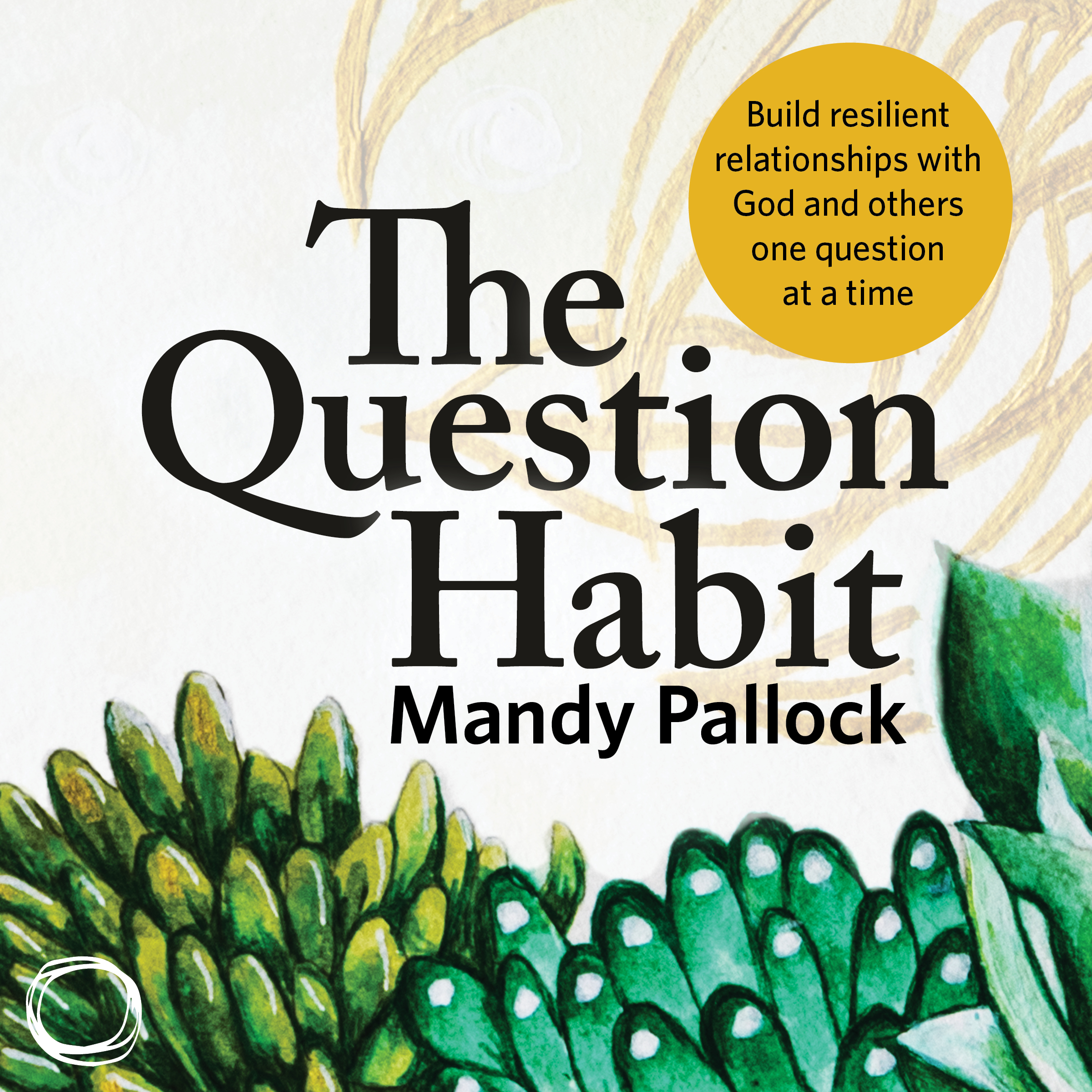
This series is based on insights from The Question Habit: The Art of Building Resilient Relationships with God and Others by Mandy Pallock.
Asking questions and listening well can take every relationship deeper!








Leave A Comment