
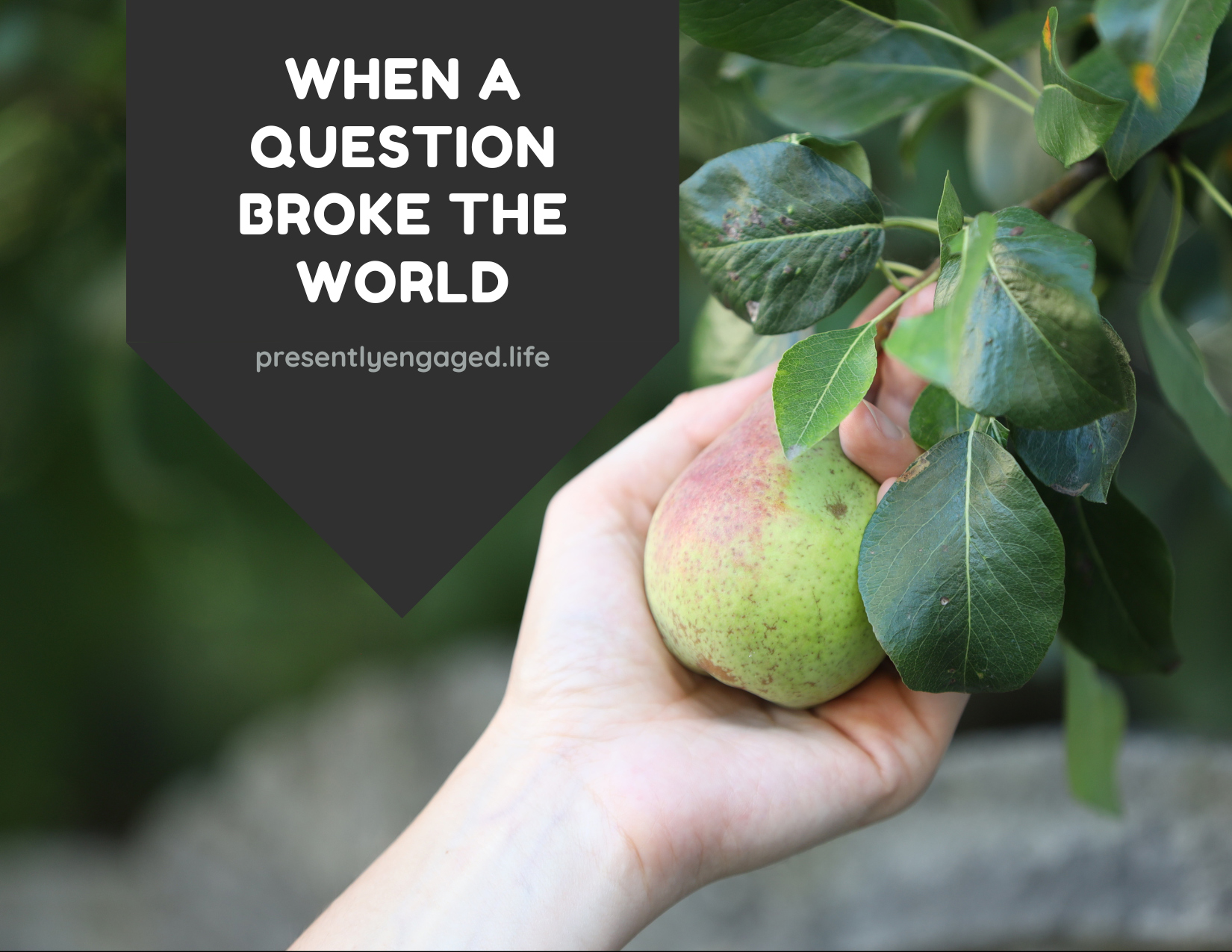
This is Part 3 of a 10-part series exploring questions in Scripture and what they reveal about building resilient relationships with God and others.
In Part 1, we explored how questions outnumber exclamation points in Scripture, and how God employs them to invite us into relationship with Him. In Part 2, we discovered that the Bible isn’t afraid of our hardest questions: in fact, it’s filled with them! We talked about how safe it is to bring those big, aching questions to God, because His Word can withstand our doubts and His heart welcomes our curiosity.
Over this series, we’ll encounter Adam and Eve, the nation of Israel, Elijah, David, Jonah, Habakkuk, Jesus Himself, and John in Revelation, all of whom ask or receive life-shaping questions.
More Than Monopoly

Thinking about life-shaping questions has reminded me of how and when I began to fall in love with Peter (also known as the Man of My Dreams), and the integral role that curiosity and open-ended questions played in that process.
We discovered that dates don’t have to be confined to the prototypical “dinner and a movie.” (Although, for the record, a dinner and a movie is indeed one of our favorite dates.)
When Peter and I were first getting to know each other, we searched for effective ways to grow a flourishing relationship long-distance. My hailing from northeast of Dallas and him residing in San Antonio made us appreciate technology (hooray for video chat and cell phones!) and cherish the moments that we were in the same town.
One evening, Peter picked me up in his trusty Ford Taurus. We drove to the store and snagged the game Monopoly. (Proof that I lived in a small town: one of the only places open at the time was the local McDonald’s.) So we perched at a small round table and pulled out Monopoly, while Peter explained his idea:
Everyone knows that a well-played game of Monopoly will take days. It’s the stuff of long Thanksgiving weekends and family feuds and never-ending sagas. So why not embrace the reality of the infinite game and make it last even longer?
We sifted through the Chance and Community Chest cards, pondering what each one made us think of. Then, we came up with a question prompt or category loosely inspired by that particular card. If the card decreed, “Pay hospital $100,” the question prompt asked, “What is something you paid $100 for?” If you got the appreciated “You inherit $100” card, you could also answer, “What is a legacy you’ve been given?”
When you drew a card or purchased a property, you answered the question on the card. When someone landed on one of your properties, they answered a question along with paying rent.
Even the process of customizing the game helped me get to know Peter better. Future rounds of Monopoly kept the process going! What to me had been a laborious game of around and around and around again attrition became a gathering spot for conversation and sharing.
…And I think that’s what God was doing in the garden. Let’s peek in our Bibles at its first pages to remind ourselves of the role questions played in the very beginning.
The First Question in Scripture
When we open our Bibles and read the story of creation, it doesn’t take long for questions to show up. And the very first question in Scripture? It’s not asked by God—it’s asked by the enemy.
Creation fell with a question.
Genesis tells us that after God created Adam, He placed Adam in a breathtaking garden. Every tree was beautiful and good for food. Adam and Eve had freedom and abundance, with only one boundary: don’t eat from the tree of the knowledge of good and evil. God made the reasoning clear in Genesis 2:17: “For in the day that you eat of it, you shall surely die.”
Then a serpent appeared. Later Scripture identifies him as Satan, God’s enemy and ours.
Here are the first questions ever recorded in Scripture, in Genesis 3:1-7:
“Now the serpent was more crafty than any of the wild animals the Lord God had made. He said to the woman, ‘Did God really say, “You must not eat from any tree in the garden”?’
The woman said to the serpent, ‘We may eat fruit from the trees in the garden, but God did say, “You must not eat fruit from the tree that is in the middle of the garden, and you must not touch it, or you will die.”‘
‘You will not certainly die,’ the serpent said to the woman. ‘For God knows that when you eat from it your eyes will be opened, and you will be like God, knowing good and evil.’
When the woman saw that the fruit of the tree was good for food and pleasing to the eye, and also desirable for gaining wisdom, she took some and ate it. She also gave some to her husband, who was with her, and he ate it.
Then the eyes of both of them were opened, and they realized they were naked; so they sewed fig leaves together and made coverings for themselves.”
Take note of what the Serpent whispered to Eve: “Did God really say, ‘You shall not eat of any tree in the garden’?”
That little question dripped with doubt, twisting God’s good boundary into a suggestion of deprivation. The very first question in the Bible is someone questioning the Word of God.
“Did God really say?”
We find ourselves asking that question today, or hear it vocalized by others, don’t we? “Did God actually say that?”
Eve listened. She looked. She reached, and ate, and Adam did, too. That single decision cracked the perfection of paradise, and our human story shifted to one of longing: longing for what was and what should have been and what will be one day.
What questions in your life today echo that same whisper, “Did God really say?” When you find yourself wondering, take that as a cue to search the Scriptures to see for yourself what God said, and how it applies to your life today. Let’s root ourselves in His truth together.
God’s Questions: Invitation, Not Accusation
Back to Adam and Eve. When Adam and Eve hid in shame, God came looking for them. He came looking. He did not walk away.
He asked the first couple a question: “Where are you?”
God knew exactly where they were. But His question wasn’t about geography—it was about relationship. He was inviting them to notice what had changed, to become aware of the distance sin had introduced.
Adam admitted, “I heard the sound of you in the garden, and I was afraid, because I was naked, and I hid myself” (Genesis 3:10).
Fear, shame, and hiding—these are realities I recognize in different parts of my own story. A guilty conscience causes us to hide, doesn’t it?
Then God asked two more questions:
“Who told you that you were naked?”
“Have you eaten from the tree that I commanded you not to eat from?”
Through questions, God was drawing Adam and Eve to awareness and conviction. He asked questions and wanted them to see and acknowledge the weight of their choice.
But instead of taking responsibility, the blame game began. Adam pointed to Eve. Eve pointed to the serpent. And finally, God asked her directly: “What is this you have done?” (Genesis 3:13).
Questions brought awareness. Questions uncovered responsibility. Questions exposed brokenness.
If God were to ask you today, “Where are you?”—in your walk with Him, in your heart, in your choices—what would your honest answer be? Maybe go on a date with God this week and talk through that question. Maybe take the question with you on a walk and ponder as you stroll. Where are you?
The First Whisper of the Gospel
Yet even in that devastating moment, God spoke hope. First, God used questions to reveal the responsibility and effect of the first woman and man’s choices. From these questions, hope would come.
To the serpent, God declared that one day a descendant of Eve would crush his head, even as the serpent struck His heel. That’s the very first whisper of the gospel. A promise of Jesus, our snake-crusher, who would come, live a perfect life, die a sacrificial death, and rise again in victory.
Because of Jesus, despair is not the end of the story. Because of Jesus, sin and shame are not the final word.
1 Peter 1:3–4 triumphantly declares:
“Blessed be the God and Father of our Lord Jesus Christ! According to his great mercy, he has caused us to be born again to a living hope through the resurrection of Jesus Christ from the dead, to an inheritance that is imperishable, undefiled, and unfading, kept in heaven for you.”
Where in your life right now do you need to cling to this promise—that Jesus has already crushed the serpent’s head, and that despair does not get the last word? The Gospel changes everything. What broken relationship might be on your heart right now, where you can remind yourself that God’s heart is for restoration and renewal?

What broken relationship might be on your heart right now, where you can remind yourself that God’s heart is for restoration and renewal?
Two Kinds of Questions
So what does this mean for us?
When Satan used a question, it opened the door for sin to enter the world. But when God asks questions, they invite us back into relationship.
Romans 8:1 tells us: “There is therefore now no condemnation for those who are in Christ Jesus.” So when God asks a question, He brings clarity, awareness, and hope.
We can follow God’s lead in this, friend.
When you disciple, mentor, or encourage others, you will meet people who feel trapped by urgency, distraction, or sin. You may even run into your own hard heart along the way. Don’t lose heart.
There’s not a single interaction that we will have today that is hopeless. God is at work in your most challenging circumstance.
Ezekiel 37:27 contains a promise: “My dwelling place will be with them; I will be their God, and they will be my people.”
Jesus the Serpent-crusher fulfilled this promise in Matthew 1:23. He is Emmanuel, which means “God with us.”
God with us. God with you in your questions. God with you as you ask questions, with a heart to listen and to understand. God with you.
So as you step into conversations this week, ask questions. Not questions that sow doubt like the enemy’s, but questions that open hearts to Christ. Pray for Jesus to let you see people the way He sees them—beloved, pursued, worth every question, worth hearing and listening to and knowing their hearts.
Think about it right now: Who in your life needs you to ask a question this week—one that could open the door to awareness, hope, or faith? How might you kick off a conversation? Can you send a text or put something on your calendar right now?
Stacking Questions onto Your Routines
A couple years ago, our kids discovered the additions on our set of Monopoly. We tried out a few of the questions on a new generation as we introduced them to the game. We don’t always play the question version of Monopoly. But the prompts are there, ready for a conversation and priming the pump for an ask.
These are the good old days, y’all.
What consistent activity do you do? Do you have family game night, or volunteer with your church high school group, or chat after a workout at the gym? How might you stack a question onto that activity?
It could be as simple as having questions ready for your next board game. Every round, one player gets to ask a question after their turn.
Our already established routines are great places to ask a question, inviting someone you love into a conversation. The goal is natural, non-awkward, and fun.
Reflection Questions
Reflect on Scripture
This post is adapted from #73 of the podcast, Presently Engaged with Mandy Pallock. Watch the full episode here if you prefer video.
The Questions in Scripture Series
- 1
- 2
Part 2 of 10: How to Read the Bible with a Questioning Heart
Want To Go Deeper?
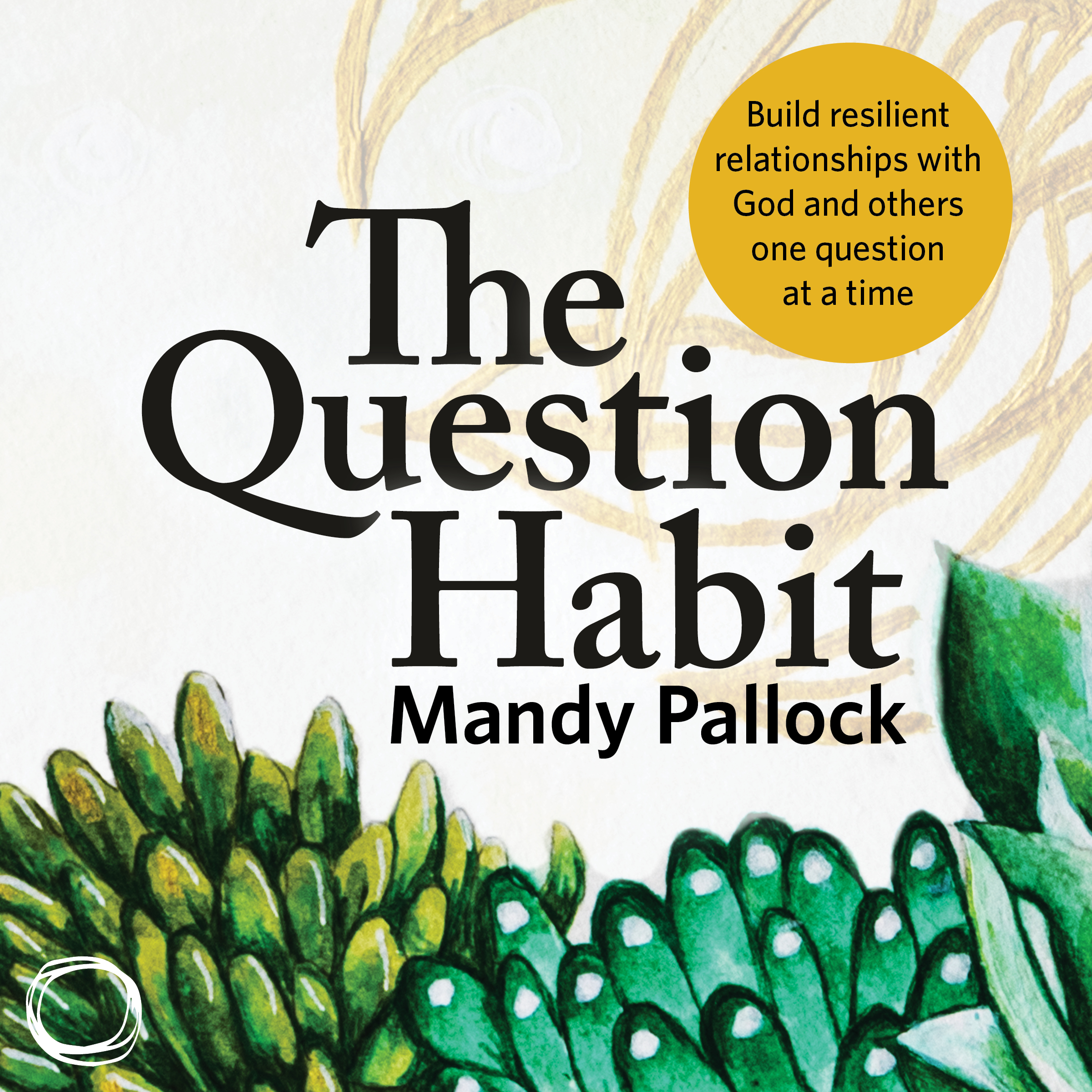
This series is based on insights from The Question Habit: The Art of Building Resilient Relationships with God and Others by Mandy Pallock.
Asking questions and listening well can take every relationship deeper!






Leave A Comment