This is Part 5 of a 10-part series exploring questions in Scripture and what they reveal about building resilient relationships with God and others.
Do you ever wish you could come up with the perfect response on the spot? I do. But I’m a “marinate first” kind of person, which is one reason I find the story of Elijah in the cave so comforting: God asked him the same question twice. He gave Elijah room to answer. And then He circled back to the very same question, gently, without pressure.
If you’re just joining us, here’s where we’ve been: we counted the question marks in Scripture (Part 1), learned to read the Bible with a questioning heart (Part 2), listened in on the first questions in the garden (Part 3), and saw how stones of remembrance spark questions (Part 4). This time, we meet Elijah in the cave on Mount Horeb, where God asks the prophet the same question twice.
Elijah in the Cave: How His Worst Day Began
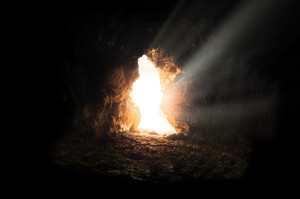
Elijah was having a terrible, horrible, no good, very bad day. He had been hiding for his life from the king and queen of Israel.
THEN he had faced that king on Mount Carmel, and prayed and watched literal fire fall down from heaven, proving the existence of the God that he served to a great crowd on the mountainside.
The people of Israel fell on their faces and declared, “The Lord, he is God; the Lord, he is God.”
THEN he had led the Israelites to punish the false prophets who had been enticing and leading the people to sin and worship the false god of Baal instead of the one true God.
Afterword, Elijah had gone to an all-out prayer fest, where he had prayed for rain seven different times, intensely asking God to send rain to the drought-stricken land.
THEN, confident that God would send rain, he told the king to hitch up his chariot and ride to the capital before the rain stopped him. THEN Elijah ran ahead of the king’s chariot all the way to the capital, roughly 15 to 20 miles.
The Threat That Sent Him Running
Once the king (named Ahab) got home, he told his wife Jezebel everything that had happened. So Queen Jezebel sent a threatening message to Elijah telling him he would definitely be dead by this time tomorrow.
THEN Elijah was afraid and ran for his life. The next scene finds him, about 95 miles later, in the depths of despair. He prayed: I’m done, God. Take my life, I’ve had enough.
After two rounds of nap and food, he travels 40 days and 40 nights to meet God on Mount Horeb, the historical mountain of God. In a cave at Mount Horeb, God meets him.
Have you ever had a day that left you feeling like Elijah in the cave?
A Rabbit Trail to the Mountain of God

Let’s make a quick rabbit trail here. Mount Horeb is generally understood to be another name for Mount Sinai. This is a place literally called “The Mountain of God.” It’s where God spoke to Moses through the burning bush, where the Israelites worshiped God after being freed from Egypt, and where God gave the Ten Commandments and the Law to His people.
In a time of great discouragement and extreme exhaustion, Elijah is drawn to a place of historical, cultural, and personal significance. Are you feeling separated from God or from what you might call “the will of God” right now? Go back to the last thing God called you to do, and do that. As James 4:8 says, “Draw near to God, and he will draw near to you.”
“What Are You Doing Here, Elijah?”
Let’s read 1 Kings 19:9-10:
There he came to a cave and lodged in it. And behold, the word of the Lord came to him, and he said to him, “What are you doing here, Elijah?” He said, “I have been very jealous for the Lord, the God of hosts. For the people of Israel have forsaken your covenant, thrown down your altars, and killed your prophets with the sword, and I, even I only, am left, and they seek my life, to take it away.” (emphasis added)
God begins with a question: “What are you doing here, Elijah?” He doesn’t start with a command, hand Elijah a plan, or rebuke him. He begins with a question.
In fact, this is the first moment of connection. God is drawing Elijah out, physically and spiritually.
And how does Elijah respond? His response is raw and honest: I’ve done everything I could, and it still didn’t work. I’m alone. I’m done.
But God doesn’t argue.
Instead, He invites Elijah out of the cave to witness something profound. God tells him to go out and stand on the mountain in the presence of the Lord, because the Lord is about to pass by.
Wind, Earthquake, Fire, and a Whisper
A wind comes, a great and powerful wind that tears through the mountains. But the Lord isn’t in the wind.
Next comes an earthquake, but the Lord isn’t in the earthquake.
Then comes fire, but again, the Lord isn’t in the fire.
Finally, a gentle whisper comes.
When Elijah hears it, he pulls his cloak over his face. He knows. This is the presence of God.
I wonder how we learn how to recognize the presence of God. How did Elijah recognize the presence of God in the gentle whisper and still, small voice? He recognized it because he had been in God’s presence before. Draw near to God, and he will draw near to you.
God Asks the Same Question Again to Elijah in the Cave
And again, the voice comes: “What are you doing here, Elijah?”
It is the same question on the same mountain, but now, after the whisper, Elijah is ready to hear.
God gently reframes everything:
You’re not alone. I’ve preserved 7,000 in Israel who have not bowed to Baal.
You’re not finished. I’m sending you to anoint kings and to train your successor.
God’s question is followed by reassurance and direction.
THEN God encourages Elijah with truth. He tells Elijah the truth about who He is and the truth about what will happen. And in verse 18 God declares: “Yet I will leave seven thousand in Israel, all the knees that have not bowed to Baal, and every mouth that has not kissed him.” Those seven thousand had not bowed to Baal, and they still worshiped the Lord.
Asking the Question God Asked Elijah in the Cave
What do we do when we feel like Elijah in the cave, when we’ve given everything and it still feels like it didn’t make a difference, or when we feel stuck in a cave of fear, discouragement, or fatigue?
Ask the question Elijah was asked: “What am I doing here?”
Don’t ask it in a sarcastic way, in defeat, or with that judgmental tone of voice we are all too familiar with.
Instead, ask it in a curious, open way: what am I doing here, in this season, in this place, in this conversation?
God’s questions are always invitations.
When you ask, “What am I doing here?”, it can:
- clarify your purpose,
- reveal misplaced focus, and
- reignite a sense of mission.
As a result, it creates space for God’s whisper. He may not answer with fire or earthquake. But He will speak.
Maybe He’ll affirm the steps you’ve taken, redirect you, or simply remind you: You’re not alone, and you’re not done. Take the encouragement and truth of 1 Thessalonians 5:24: “He who calls you is faithful; he will surely do it.”
Make It Mentoring

And friend, maybe you’re not the one sitting in the cave this time.
Maybe you’re walking alongside someone who is: someone tired, disappointed, wondering if their work matters, or wondering if God still sees them.
This is where your role as a loving mentor or friend becomes sacred.
You don’t have to fix everything or offer the perfect advice. Instead, you can simply be present.
Sometimes the most Christlike thing you can do is create a safe space for honest reflection, and ask, gently, the same question God asked Elijah: “What are you doing here?”
You might ask it over coffee, or during a quiet walk, in a voice memo, or sitting side by side after a long week of ministry.
So ask it with compassion, not correction or judgment for their emotional state. Let it invite, not interrogate.
Because questions can open doors, gentle ones help someone name what hurts, surface what’s heavy, and remember what’s still true. And as they speak, God’s whisper can begin to meet them right there, reminding them they’re not alone, not forgotten, and not finished.
That’s the power of presence and a good question: it can position our hearts to hear God’s still, small voice.
Give Questions Room to Marinate
And let’s learn from God’s interaction with Elijah in 1 Kings 19. God didn’t demand an answer right away. He gently asked an evaluation question, gave Elijah space to consider and answer, then circled back with the same question.
Do you remember my “marinate first” confession? I don’t expect every question to land right away, or for someone to have a quick answer on the spot.
In fact, some questions need time to breathe.
Just because I’ve asked doesn’t mean a response has to come immediately. I can listen, give space, and trust that when the moment’s right, we can return to the question, without pressure, with gentleness, and maybe with a little more clarity the next time around.
Remember: Asking questions and listening well can take any relationship deeper. It’s about the relationship.
Elijah in the cave reminds us that God’s questions are always invitations.
I’d love to hear how God’s question is meeting you this week. Share it in the comments below or tag me on Instagram @mandy_pallock.
Reflection Questions
- If God asked you today, “What are you doing here?”, what would you say? Give the honest answer, not the polished one.
- What was the last thing God called you to do? What would it look like to go back to it and draw near to Him this week?
- Who do you know who is sitting in a cave right now? What gentle question could you ask them, and how could you give them space to answer?
Reflect on Scripture
- Read Matthew 7 for yourself. It contains six questions: five that Jesus asks directly and one that “many” will ask Him on that day in verse 22. Listen for the evaluation prompts, the moments that invite us to pause and consider how we treat others and what we value.
- Which question in this chapter do you most need to sit with today?
This post is adapted from #75 of the podcast, Presently Engaged with Mandy Pallock. Watch the full episode here if you prefer video.
The Questions in Scripture Series
- Part 1 of 10: Why Questions Matter: The Power of Curiosity in Your Faith
- Part 2 of 10: How to Read the Bible with a Questioning Heart
- Part 3 of 10: When a Question Broke the World
- Part 4 of 10: Stones of Remembrance: How Stories and Questions Shape Faith
- Part 5 of 10: The Power of a Repeated Question: What Elijah’s Cave Teaches Us
Want to Go Deeper?
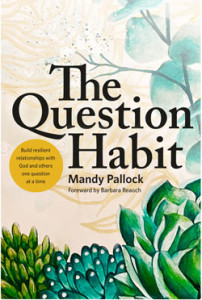
This series is based on insights from The Question Habit: The Art of Building Resilient Relationships with God and Others by Mandy Pallock. Visit thequestionhabit.com for more.
Asking questions and listening well can take every relationship deeper!
By Mandy Pallock